

At the 2026 Gartner Data & Analytics Summit, the industry was introduced to a new must-have: the “Context Layer”. The argument is that for AI to be useful, we need to build “Context Infrastructure”, essentially a brain that understands the relationships and rules of a business before the AI ever touches the data. Gartner even predicts that 60% of AI projects will be abandoned by 2028 because they lack this foundation.
It sounds like a breakthrough, but if you have spent years in the trenches of data science, this feels like a familiar story with a new coat of paint.
What is the “Context Layer”?
Technically, the context layer is a decoupling of business logic from the raw data storage. According to recent 2026 research from Strategy, it is now categorized as “Context Infrastructure”. Instead of an AI agent looking at a raw SQL table and guessing what “customer_id” means, the Context Layer provides a semantic map, identifying that “customer” in this table is the same “entity” as “user” in another.
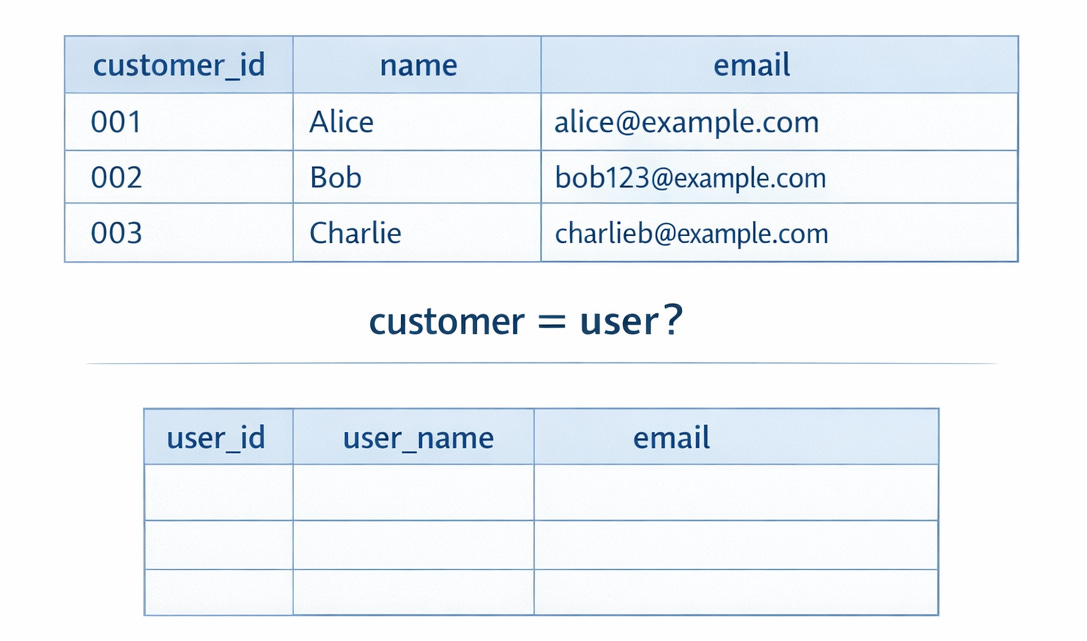
This involves Context Engineering, which is the process of making tribal knowledge machine-readable. It ensures the AI knows that “Revenue” in a sales report means something different than “Revenue” in a tax filing. However, a Drexel LeBow study from early 2026 found that while 87% of leaders claim their data is AI-ready, nearly half (42%) admit their infrastructure is actually their biggest obstacle. This disconnect happens because we are trying to build advanced context on top of existing debt.
Anchoring Context in Reality: The Audit
In my previous work, I’ve argued that you cannot build these high-level contextual maps if you are still paying interest on the basics.As I explored in 10-Minute Data Strategy Audit: Part 1 - Infrastructure Debt, infrastructure debt manifests as “Toil”, the manual, repetitive work that eats your team’s time.
If your critical models only run on one person’s laptop, your Context Layer will never be more than a prototype.
Furthermore, in 10-Minute Data Strategy Audit: Part 2 - Data Debt, I noted that the most expensive kind of debt is Data Debt, which destroys trust.
When an AI looks at a Shadow Dashboard created by a VP who doesn’t trust the official numbers, the AI inherits that lack of shared rules and begins to hallucinate.
A Pragmatic Solution
The solution isn’t to buy a “Context Infrastructure” platform and hope it solves your governance. True AI-readiness comes from reducing the surface area of your debt so the AI has a clear signal to follow.
Define the Handshake: Before building a semantic map for an AI, fix the Data Contract between the software engineers producing data and the analysts consuming it.
Automate the “Boring” Foundation: Target the manual restart in your pipelines. If a system requires human heroics just to stay online, it will never be stable enough to support an autonomous agent.
Consolidate the Truth: Identify the core five metrics everyone uses. If your humans haven’t agreed on what “Active User” means, your AI certainly won’t find the answer in the metadata.
AI readiness is often described as something we’re chasing, but it really reflects how well we’ve handled years of ignored data debt, because the “Context Layer” only works when the foundations beneath it are finally stable. Being ready doesn’t come from buying a new tool; it comes from having infrastructure that runs reliably through automation and data definitions that are documented clearly enough for people to trust.
When a team can answer “Where did this number come from?” with a shared, well‑documented explanation, they’re already ahead of the 60 percent of companies Gartner expects to struggle, and they’re in a place where machines can actually learn from the systems humans have built.
Resources& Further Reading
Atlan. (2026, March). Key Takeaways from Gartner Data & Analytics Summit 2026.
Drexel University, LeBow College of Business. (2026, January). The 2026 State of Data Integrity and AI Readiness.
IBM Think. (2026, February). Why AI Data Quality is Key to AI Success.
MicroStrategy / Strategy Software. (2026, April). Why Gartner Just Put the Semantic Layer on the Same Level as Cybersecurity.
Thanks for sharing, Nazan, really interesting framing. The context layer is shape-shifting fast: from static RAG to more dynamic systems like memory stores and knowledge graphs, each with their own tradeoffs around immutability, schema evolution, and typed entities. Your point about anchoring it in solid foundations resonates a lot. No semantic map survives contact with shadow dashboards and brittle pipelines. I've been writing about adjacent problems on my Substack, would be curious to hear your take. Latest piece on World models > https://louisdevitry.substack.com/p/19-the-world-behind-the-email
AI readiness definitely needs to be discussed, especially with so many organizations pushing agents into day-to-day workflows.
I've noticed this as well. The debt is only piling up. Things like vague naming or inconsistent mappings such as `userId` vs `customerId` might have been manageable when humans were interpreting the data, but they become much more expensive when AI is the consumer.
It makes me wonder how many organizations are actually prioritizing cleaning up this data debt instead of just layering AI on top of it.